Can Adults Get Dental Sealants in Independence, MO?
November 19, 2026
Can Adults Get Dental Sealants? The Short Answer
Can adults get dental sealants in Independence, MO? Yes, they can. Sealants are not just for kids. If your back teeth have deep grooves and no large fillings, a sealant can help protect them from decay at any age.
At Dental Care Independence, Dr. Applegate and Dr. Lee evaluate each adult patient individually. We look at your tooth anatomy, your cavity history, and your daily habits before we recommend anything. Sometimes a sealant is a smart, simple choice. Sometimes another option fits better. We will explain both so you can decide with confidence.
A new patient visit is a good place to start. Our $20 New Patient Special covers a consultation, exam, and X-rays, so you can find out whether sealants make sense for you. Learn more about trusted Independence dental care and what our team offers.
Why So Many Adults Assume Sealants Are for Children
Sealants are most often placed on children's permanent molars soon after they come in. That is why many adults never hear about them, and why many were never offered them growing up.
The reason for placing them early has nothing to do with age limits. Cavities start in the same place at any age: the deep pits and grooves on chewing surfaces. Adults who still have those grooves, and still have healthy enamel there, can benefit too.
What Dental Sealants Do for Adult Teeth
How a Sealant Works
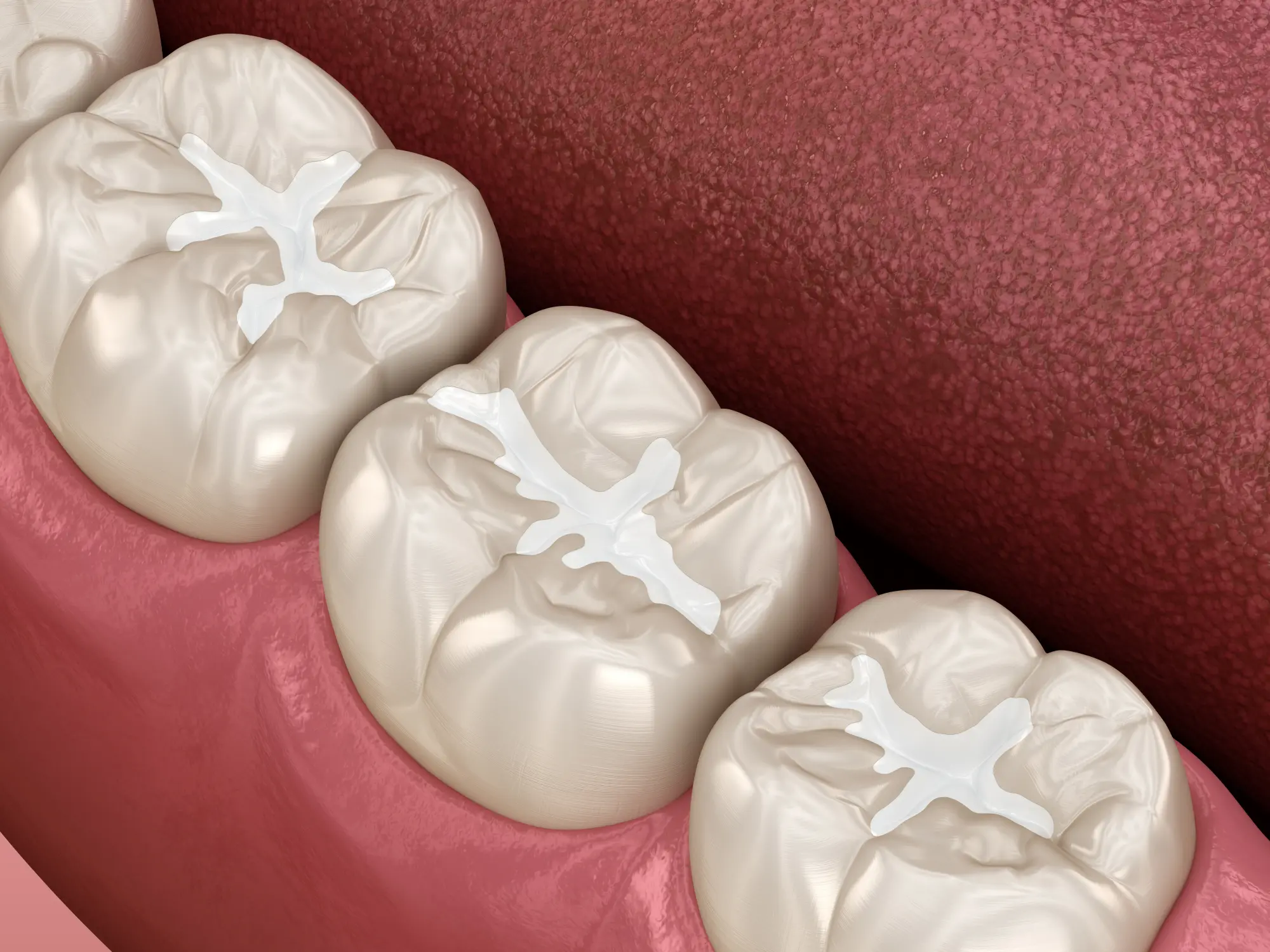
A dental sealant is a thin, tooth-colored resin coating that is painted onto the chewing surface of a tooth. It flows into the tiny grooves, then hardens under a special light. The result is a smooth, sealed surface. Our dental sealants are a simple way to add this protection.
Why does that matter? Toothbrush bristles often cannot reach the bottom of a deep groove. Food and bacteria collect there, and acid from that bacteria wears down enamel. A sealant covers the groove so there is nothing for plaque to settle into.
Why Adults Still Get Cavities
Many adults assume that cavities are mostly a childhood problem. In reality, adults face their own set of risks.
Dry mouth from medications, frequent snacking, sugary drinks, and acid reflux can all raise your risk. So can mouth breathing at night, which dries out the mouth and reduces the protection saliva normally provides. Dr. Applegate often talks with patients about the mouth-body connection, and this is one example. What happens with your sleep and breathing can show up in your teeth.
Who Is a Good Candidate for Adult Sealants
Not every adult needs sealants, and not every tooth is a match. During your exam, we check for the following signs that a sealant may be worth considering.
- Deep pits and grooves on your molars or premolars that are hard to clean
- Teeth with no fillings or only small ones on the chewing surface
- A recent history of cavities, especially on back teeth
- Dry mouth caused by medication, mouth breathing, or other health conditions
- Early, very shallow areas of enamel softening that we want to monitor and protect
- Braces, aligners, or other orthodontic history that has made brushing more difficult in the past
Why X-Rays and an Exam Come First
A sealant should only go over a healthy surface or a very early area of concern. If decay is already working into the tooth, sealing over it is not the right move.
That is why we use X-rays and a careful exam before placing anything. Our state-of-the-art technology helps us see what the eye cannot, so your treatment plan is based on facts and not guesses.
When Sealants May Not Be the Right Fit
Teeth That Already Have Large Fillings
If a tooth has a big filling or a crown, the chewing surface is already covered. A sealant adds little in those cases. Sealants work best on natural enamel that is still intact.
Smooth, Worn Teeth
Many adults have molars that have worn flat over the years. Without deep grooves, there is less need for a sealant. Your risk may come from other areas, such as the gumline or between teeth, and those call for different strategies.
Existing Decay
If we find a cavity, it needs to be treated first. Depending on the size, that may mean a filling. For larger damage, our same-day crowns in Independence can restore the tooth in a single visit. We will talk through each option and what it means for your budget and schedule.
What to Expect During a Sealant Appointment
A Quick, Comfortable Process
Placing a sealant is one of the gentler procedures in dentistry. There is no need for drilling or numbing shots. Many patients find it easier than a routine cleaning.
First, we clean and dry the tooth. Next, we apply a mild solution that helps the sealant bond to the enamel. We rinse it, dry the tooth again, and brush on the sealant. A curing light hardens it in seconds. Then we check your bite to make sure everything feels natural, and you’re done!
Support for Anxious Patients
If dental visits make you nervous, tell us. We take our time, explain each step before we do it, and go at your pace. Sedation options are available for patients who need extra comfort with other treatments. Sealants are a low-stress way to begin if it has been a while since your last visit.
How Long Adult Sealants Last and How to Care for Them
With good care, sealants can last several years. Many hold up for up to a decade, though chewing habits and oral hygiene affect how long yours will stay in place. We check them at your regular visits and repair or replace them if they wear down or chip. A few habits help your sealants last longer.
- Brush twice a day with a fluoride toothpaste and floss daily
- Avoid chewing ice, hard candy, or pen caps
- Limit sticky snacks and sugary drinks that cling to the chewing surfaces
- Wear a nightguard if you grind your teeth and we recommend one
- Keep up with your cleanings and check-ups so we can monitor each sealed tooth
Why Regular Check-Ups Still Matter
A sealant protects the chewing surface only. It does not shield the spaces between your teeth or the area along your gums. Routine cleanings and exams keep those areas in check, and they let us catch any small problem before it becomes a bigger one.
How Sealants Compare With Fillings, Fluoride, and Crowns
Sealants Versus Fillings
A filling repairs a tooth after decay has done damage. A sealant aims to stop that damage before it begins. Sealants remove no tooth structure, while fillings require us to remove the decayed portion first. For the right tooth, prevention is gentler and often less costly over time.
Sealants Versus Fluoride
Fluoride strengthens enamel and works across the whole tooth. Sealants create a physical barrier on the chewing surface. The two work well together, and many patients benefit from having both. Our fluoride treatments pair well with sealants.
Sealants Versus Crowns
Crowns are for teeth that are cracked, heavily filled, or weakened. A sealant is for a healthy tooth that you want to keep that way. If a crown is ever needed, we can often complete it the same day.
Cost, Insurance, and Getting Started
Adult sealant coverage varies widely. Some dental plans cover sealants only for children, while others include adults in certain situations. Because of that, it helps to ask about coverage before treatment. We are happy to look at your plan with you and give you a clear idea of what to expect.
No insurance? No problem! Our in-house membership plans start as low as $24 per month and include check-ups, cleanings, and discounts on treatment. Combined with the $20 New Patient Special, it is an affordable way to get a full picture of your oral health and a plan that fits your lifestyle.
Ask Dr. Applegate or Dr. Lee About Your Teeth
Whether you are protecting deep grooves, managing dry mouth, or simply tired of getting cavities, our team is glad to help. We offer preventive and cosmetic care, implants, dentures, root canals, and emergency visits, all under one roof.
That means if your exam shows something other than sealants is the better path, we can take care of it right here. Call our office to schedule your visit. We will answer your questions, explain your options in plain language, and build a plan around what matters to you.